THINGS CAN BE SEEN MORE EASILY IN MOTION
De Fabriek • Eindhoven / The Netherlands • 2017
This text was written on the occasion of the working period and solo exhibition of Katherina Heil at De Fabriek in Eindhoven, March 2017.
Gemma Medina Estupiñán – Art historian, curator & cultural producer.
Our perception is made up of the impressions captured by our senses and the information contributed by our brains: it is a mixture comprising elements of what we see, what we intuitively know and what we sense. Some ideas come from our knowledge, our collective memory, but others spring from our individual experiences. Each object provokes an immediate reaction in our mind, but we don’t notice it very often. Not any more. We now live in a world overloaded with images, stimuli and distorted information that obstruct our perception, numbing our capacity to interpret the reality.
As Marcel Duchamp pointed out more than once, the notion of art goes beyond retinal observation; it requires an intellectual process. Katherina Heil proposes that we reactivate these mechanisms of perception. She invites us to look carefully: to think, discuss, consciously and intuitively reflect and, overall: she encourages us to enjoy the process.
Her work is defined by a continuous dynamic of experimentation and questioning. The artist combines her knowledge of the principles of perception, assimilated during her practice as a photographer, with a fascination for objects, their physical appearance, conceptual essence and potential for abstraction. For this reason, she doesn’t attach her practice to any one material or technique, and she avoids assuming the sculpture is a finished object. Her methodology is a steady process, ever in motion, in which each work represents a chapter that can become the springboard for, or a component of, future works.
What you see here is a selection. Every work embodies a moment in her trajectory: an encounter. Each work represents a journey that perhaps began with a question, research, learning how to use new materials and techniques, the production or the discovery of the object through perception, embracing its shape and its conceptual frame. This is followed by an attempt to isolate and de-contextualise the object so it evokes our poetic imagination, opening up space for alternative interpretations and multiple narratives. A conceptual game for both she and the viewer to play.
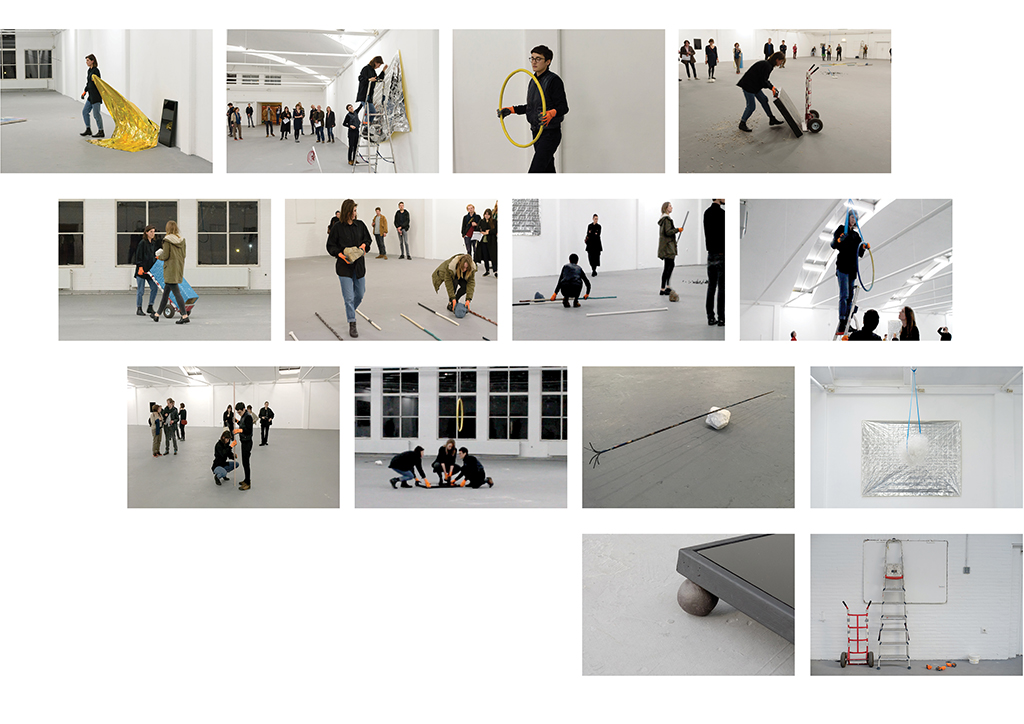
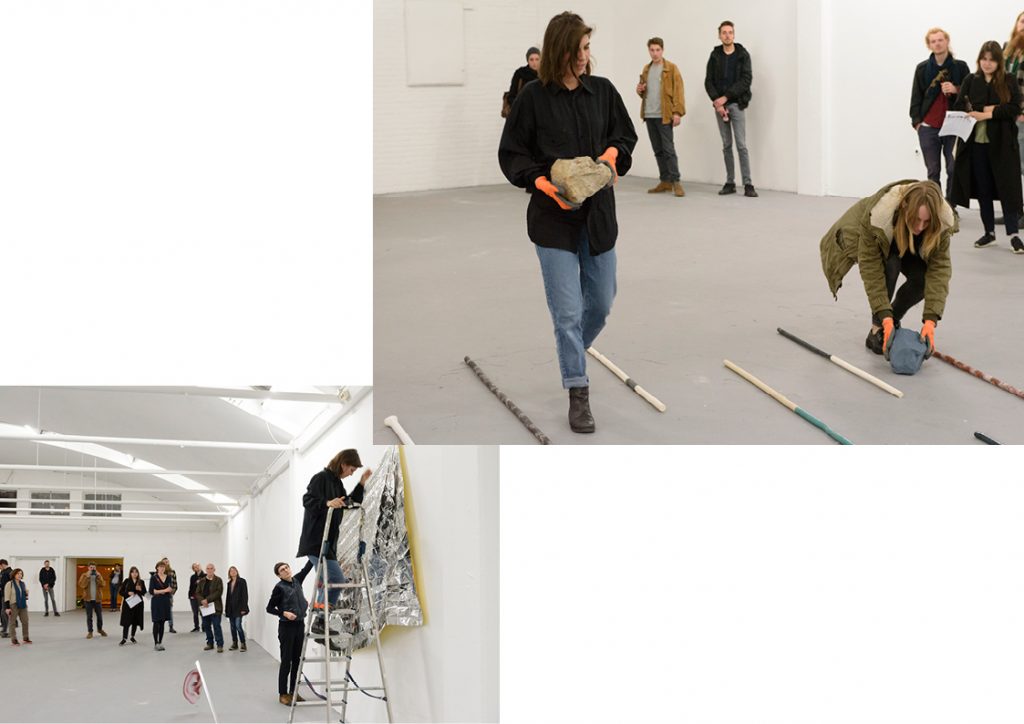
Heil presents us with a puzzle that she has been composing in various iterations over the last few weeks at De Fabriek: combining fragments of these works, placing them as enigmas that our brains want to solve and then moving the pieces yet again, breaking their inherent rules, creating unusual associations and stories. There is not a right placement or a definitive discourse but many possible interpretations.
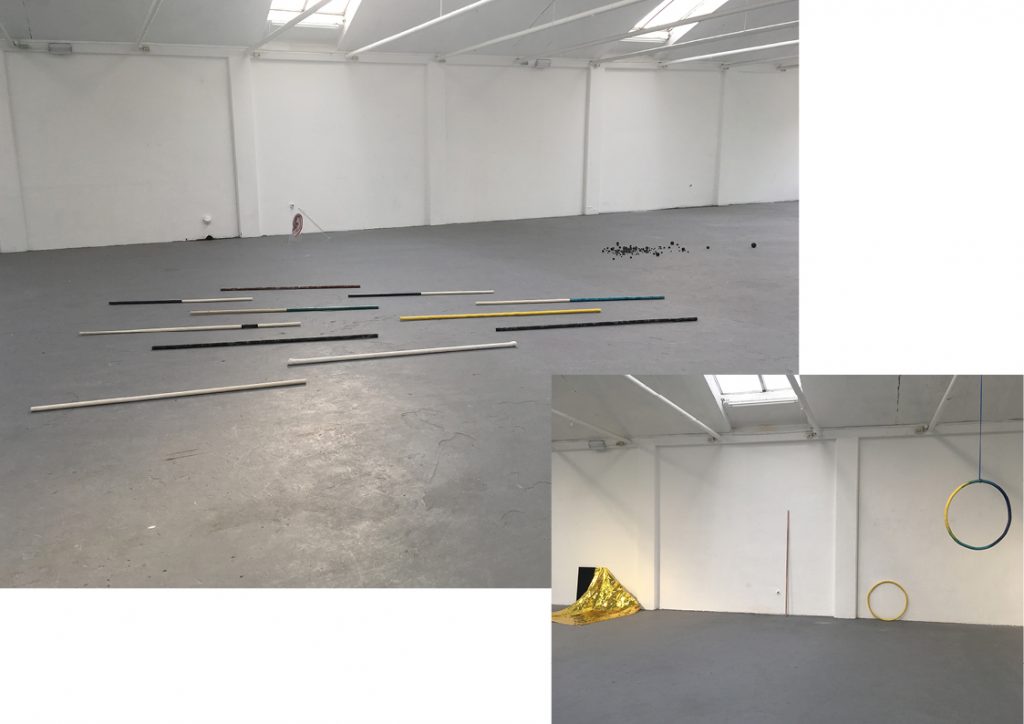
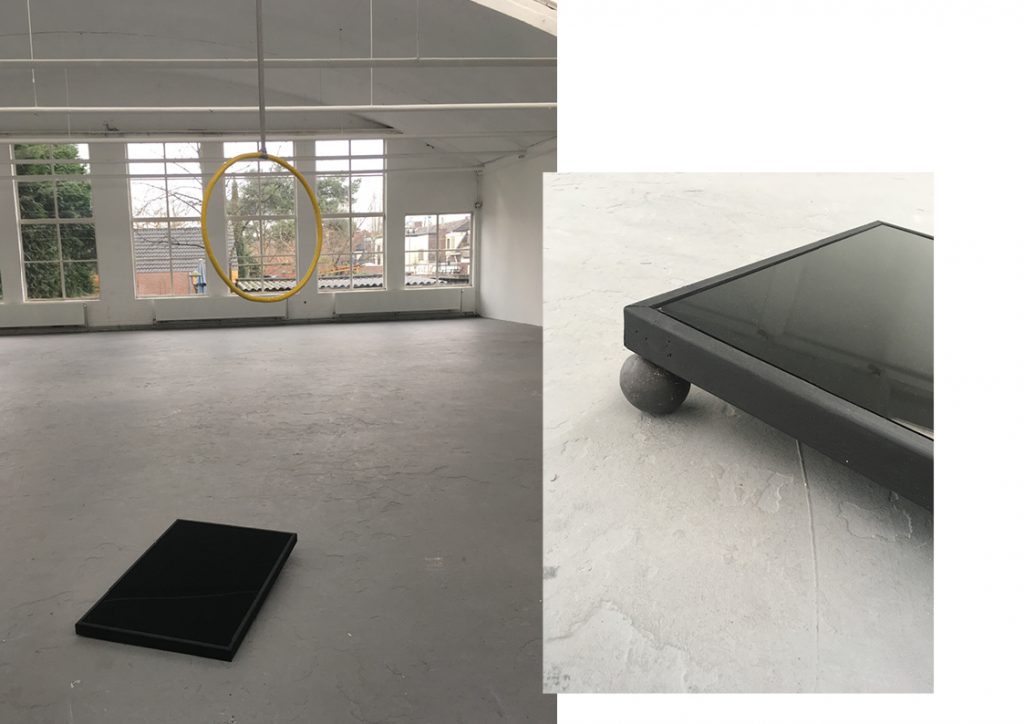
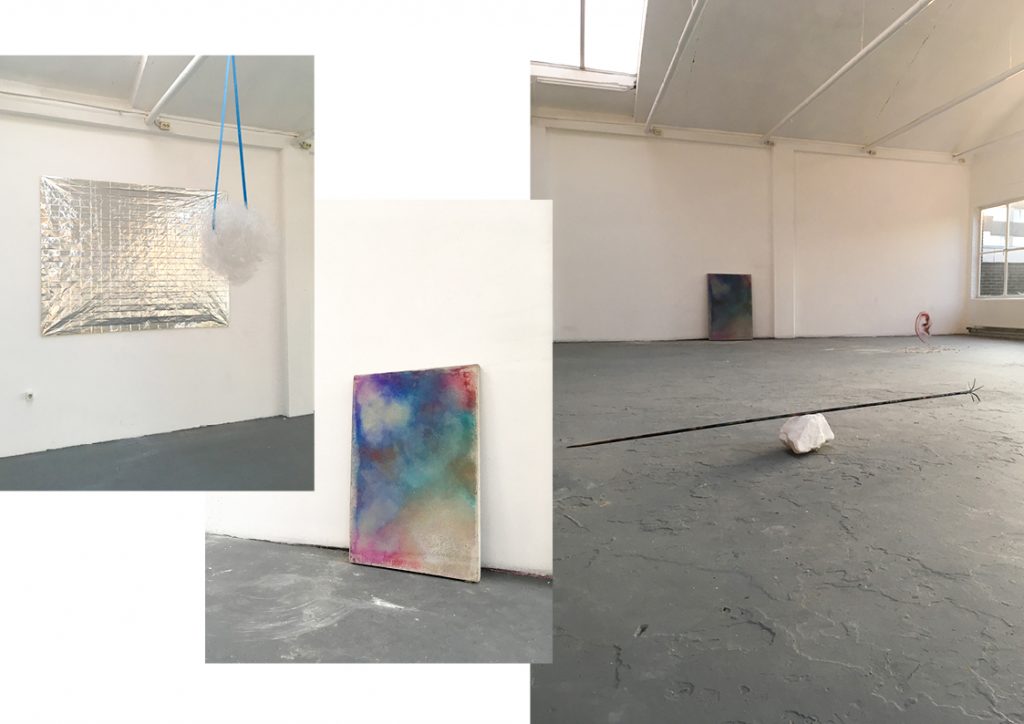
At first sight, it looks like we are in a group exhibition. You have to get closer — take a walk through the objects and look carefully. There is a group of spheres clustered or expanded like constellations on the floor, a water column, some sticks that have a minimalistic touch with different textures and colours, a couple of rings hanging or lying on the floor, a huge bone that is not what it appears to be, an ear imprinted in acrylic glass, a rescue blanket; a couple of surrealist fingers that are touching something as if it were forbidden, some stones… The first questions arise. What is this? What does it mean? How does this interact with space?
Your challenge now is imagining how these objects relate to each other and how they relate to you the viewer. It is like trying to describe your own biography by selecting a few concrete moments that have been de-contextualised. Do you think it would be possible to understand their essence without having experienced them? Could you then recognise how transcendental they were in your life or how they disrupted a future development? Could we create transversal lines to help us appreciate the general sense of our life? Could we even imagine different narratives about the same life?
Perhaps things can be seen more easily in motion. When objects change their location — shifting our perspective, we understand that everything is part of a whole picture formed by fragments; a series of nods to conceptualism that perhaps we cannot decipher, but they will pique our curiosity in an exercise of pure perception. Maybe Duchamp was right and art is one of the few weird spaces that still drive us to use our capacity of analytical observation. Katherina Heil proposes that we dissolve into her creative universe to find out how these objects can open up our imagination and affect us, activating a conversation that goes far beyond the beauty of a sculpture.